National Zoo Field Trip
May 3rd, 2026
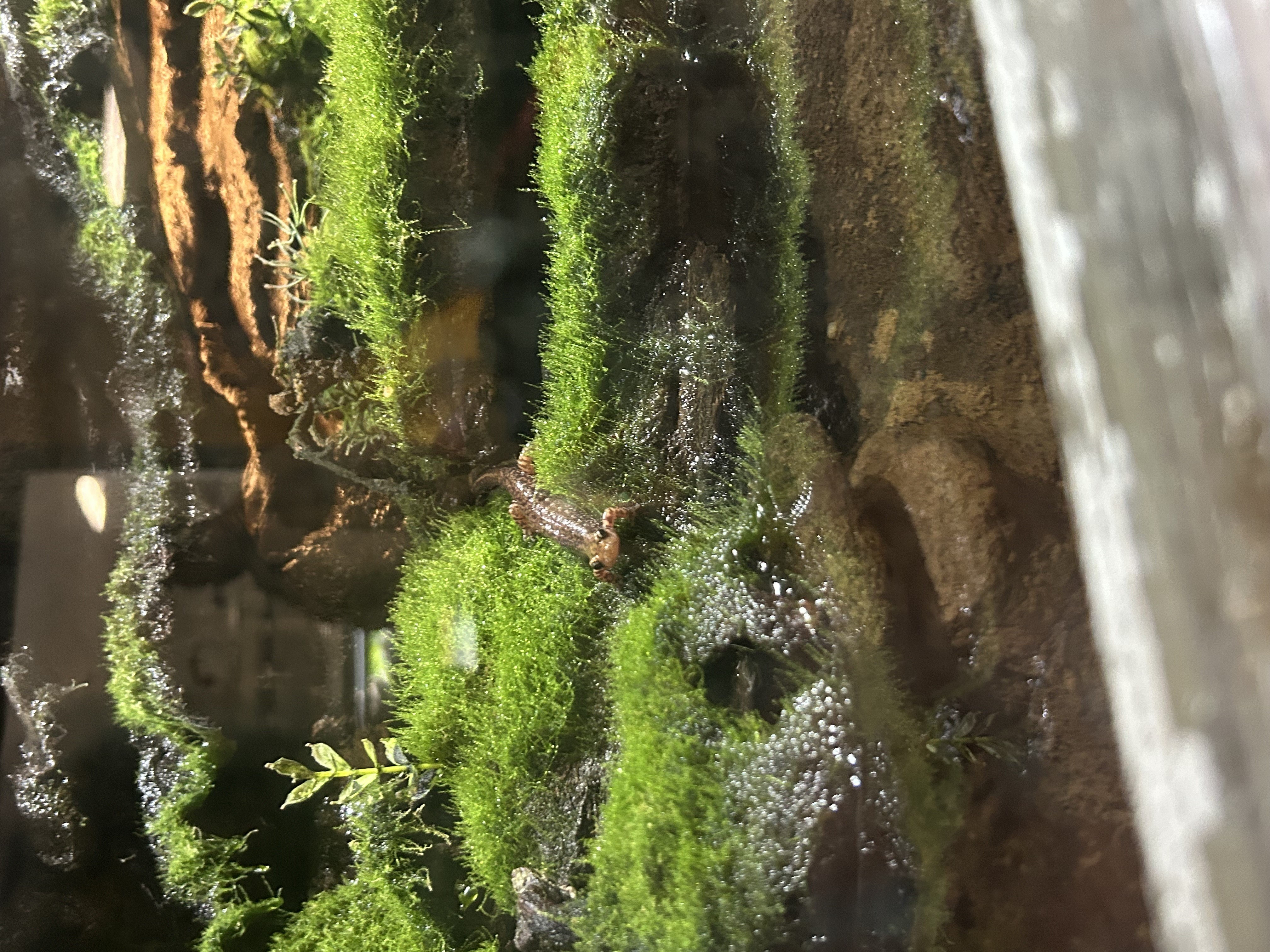
Apalachain Salamander
Amazonia
In the Amazonia exhibit guided tour, I learned a lot of new information and saw a variety of cool species. One species we discussed was sting rays. We saw Amazonian rays in multiple places throughout the house. Additionally, we learned about how the rays have a hole behind their eyes that aids in breathing and is synonymous with the ear holes in humans. We also saw a variety of poison frogs in this house. There are many different species of these and I was really excited to see them all. Additionally, the Panamanian golden frog, which is assumedly extinct in wild, is housed in this exhibit. It was really cool to see their living history and to read more about them. Because I was really interested in them after reading about the fungus that is spreading and partially causing their extinction, I am really glad I got to see them. We also saw and discussed the Arapaima fish. It was cool to see how the zoo is able to keep such a large tank clean and safe for the species living there. One sign that I found very interesting in this exhibit was about the different ways to find medicine in the rainforest. It provided information on how certain plants are used in modern and traditional medicine. In order to support the animals' mental health, this exhibit includes features that would be seen in the wild, such as the fake termite mound on the tree. This also helps to educate people about how termites can't live on the ground because of flooding. Another way the zoo helps the birds' mental health is by giving them space to fly around, even if it is not a lot of space. Another educational exhibit was the electric eel example, which we could touch both sides and feel the current. This house was very easily accessible from an educational standpoint.
Small Mammal House
The small mammal house was also really cool to walk through. My favorite animal was the Sand Cat. It was so cute. We also saw the Rock Hyrax. It was cool to see the design of the cage that included limbs to climb on and little caves or boxes to hide in. This helps the animals to have a space of their own and have better mental health. Additionally, the signs next to each enclosure help to educate viewers about the animals in each area. They provide a basic background at a middle school education level. It is typically easy to read and provides some background information, but nothing that would require a lot of scientific knowledge. However, most people do not spend a lot of time reading the signs. We also saw the Golden Lion Tamarin. It was really a unique experience to watch them run and jump between the limbs. Their agility was quite impressive. We also got to see the Naked Mole Rats. There were a lot of them, including some babies.
Reptile House
The third exhibit we visited was the Reptile House. It was a super fun experience and I enjoyed walking through it. I especially enjoyed getting to see one Appalachian Salamander feed. I saw one display that compared the mammalian anatomy and cardiac system to the reptile one, which I found really interesting because it was something I learned about in BSCI207 last semester. This display was probably at a high school level, but it was interactive so people of all ages could see the physical differences. It is a way that the zoo is able to educate outside of simple plaques. The house in total is most likely at a middle school level. Another species we saw was the False Water Cobra. There was a sign telling about its habitat and its location in the world. We also saw Island Iguanas. The sign near them told about how only small fragments of their habitat remain. A fourth species we saw was Weber's Salfin Dragon.