


Event name: Horn Point Laboratory of the University of Maryland Center for Environmental Research, Cambridge, MD & “Underground Underwater: Climate Change and Harriett Tubman’s Legacy”
Event time and place: April 18th 2026 at Horn Point Laboratory and Harriet Tubman Freedom Centre and Underground Railroad Historical Sites
On Sunday 18th of April, several scholar program groups such as SGC, ETE, and MSS set out on an excursion to Horn Point Laboratory and the Harriet Tubman Freedom Centre. The first part of the trip would be to one of University of Maryland’s Laboratories located on the eastern shore before switching to a guided tour about Harriet Tubman’s legacy and climate change impacts on the historical sites.
Early in the morning of the 18th, I woke up around 6 am with much anticipation and just because it was a Saturday. I always wake up early on weekends, but the trip definitely made me get up and get ready way ahead of schedule. I packed several items thinking I would need them, but I definitely took too much looking back as to how I dragged them around all day.
Around 7:40 am to the meetup location early. It wasn’t a far walk, but I really didn’t want to miss the bus. At the back of Centerville, I found that there were several groups going and met with some of the people from my scholars. I got to know Natalie who I hadn't talked to even though she was in my scholars program at SGC. Part of the reason I like excursions is to meet new people so this was a great chance. The leaders also provided us with snacks which I’m so grateful for as the dining halls hadn’t yet opened yet. After getting on the fancy bus, me and Natalie sat at a table with someone from the Media scholars, Anthony, and a vice-director of life sciences, Erin. We pretty much stayed with each other through the rest of the trip and got to know each other as we rode the bus. I learned that Anthony was actually on my floor in Cumberland and Erin knew one of my closest friends in life sciences. I also found out that fancy buses do not make motion sickness any more tolerable than regular buses so I will be getting some medication for any future excursions on bus or metro.
Aside from the majority of the time on the bus, we reached Horn Point Laboratory in about 2 hours from leaving campus. Past the gates of the Laboratory premises, there was a long road with trees on both sides, reminding me of an orchard. We were brought into a room in the Environment Education Centre where half of us stayed and first watched an introductory video. The other group went to a separate location, each covering about the same things. Our tour guide Emily introduced herself to us but I was still nauseous from the bus ride so the information may not be the most correct. I do believe she said she did some research and worked on oysters before moving to the Morris Marine Lab.
After leaving the Education Centre, we moved to the Coastal Sciences Building where we got a look at the equipment and listened to some of the projects being conducted by Horn Point Laboratory(HPL). One research seen across the laboratory and in this eastern shore location is oyster reef restoration. This goal of restoring oyster reefs may seem mundane, but Emily explained that oysters are very effective filter feeders and very important to the ecosystem. In previous excursions I have also heard about its importance and seen that the oyster reefs can also provide mini habitats for other organisms too. Overharvesting and habitat destruction are some of the main causes, but ocean acidification also plays a role as the shells don’t last as long. The tour Emily guided us showed that oysters grow best on oyster shells, so they have used oyster shells from restaurants and other ways of collection to make oyster reef bars. These are cement bars that have oyster shells embedded in them that allow oysters to grow on top. Another method is oyster castles which are also made of cement but no oyster shells. These allow oysters to grow as they are stationary and will not be able to get access to food if they sink to the bottom of the waters. These oyster reefs also serve as a coastal erosion barrier to an extent by breaking some of the energy from waves. Without them, the habitat would be lower in diversity, have more polluted waters, and slightly more erosion on the shorelines. Emily did not point out much on how they monitor natural oyster reefs or the ones they put in place, but most of the studies on oysters occurs in the laboratories as they focus more on restoration. They most likely have some cameras or sensors that can check on reefs, or just samples tied to buoys that can be accessed for easy monitoring. Their restoration has been mainly with collecting oyster shells to create structures for baby oysters to latch onto and growing oysters for research.
Another research project is the Midbay Island restoration project. It focuses on the issue of sea level rise due to climate change which eroded or submerged many of the islands on the Chesapeake. This is significant as these islands are habitats for many organisms and were once areas that people lived on too. These situations are monitored by scientists that work on the restoration effort or there to focus on the wildlife aspect. They go out on boats and survey the islands from time to time to see the changes. I assume they also use instruments to perform some tests too. This project/experiment has been conducted on several islands such as Popular Island and James Island. They create cells on the Islands and pump dredge material from the bottom of the Chesapeake, for large ship transportation, to build these islands back up. This also solves the issue of marsh migration as the dredged material allows the marshes to remain and not be swallowed by open sea.
A third project/experiment was about Terapins. It was a brief introduction, so I don't remember it as well. But it was based on the issue of terrapins and its decline in population. These turtles are a keystone species in salt marshes like on the marshes on Chesapeake and its islands. Emily didn't mention how these turtles are monitored, but usually turtles and other organisms are visually recorded and/or tracked with bands or some other identification. These turtles have been collected from Popular Island and brought back to controlled environments to be raised before release again. This ensures highest survival rates which helps with preservation of the species from going into extinction. This project also partners with elementary schools where a class may take on a baby turtle and raise it before releasing it back to the island. This partnership allows students to be engaged and learn more about the ecosystem that surrounds them as well as helping with the care of one of Maryland's turtles.
Horn Point Laboratory reaches out to the community in several ways. One can be seen in partnerships with local schools like in raising terrapins. They also have guided tours similar to the one on the excursion this report is on. Other opportunities include seminars and public science talks that engage with the community and educate them about science topics and projects. They also have articles/papers that speak on their actions and discoveries. Most of this information can be found online under the “community learning” page. But there are volunteering events that also connect with the community. These opportunities are all in-person or virtual which can connect with people in the local community or those a bit farther away. There is also much information on their current projects, what they do in the laboratory, and ways to connect on their website at umces.edu.
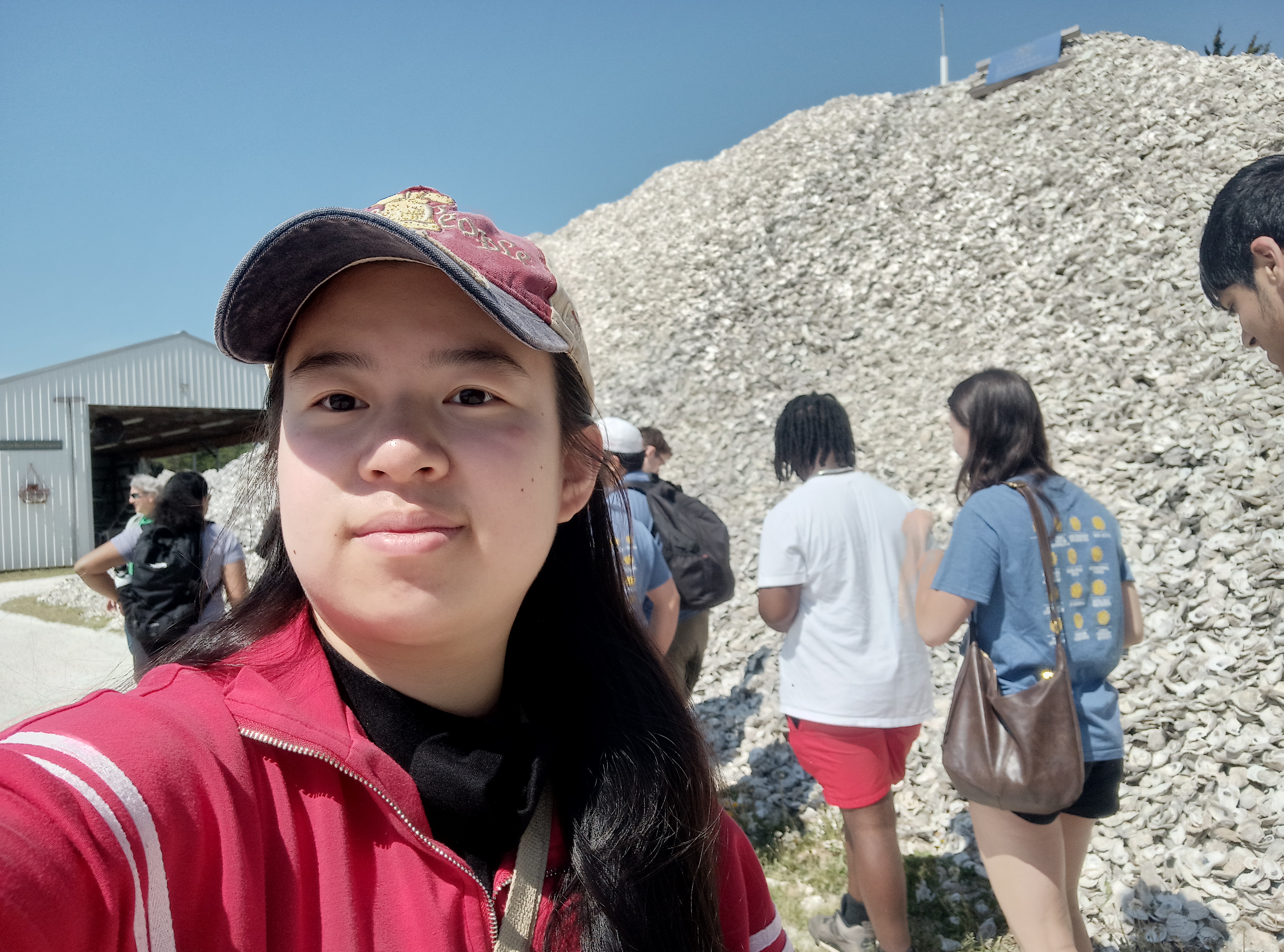
After leaving the Environmental Education centre, we made a stop to look at the oyster shell piles at the Oyster Recovery Program. The piles were huge and spanned so far. We learn on the way that some shells came from donations from restaurants and they even have a collection bin on the side of the path for any donations. The location we went to was the Aquaculture and Restoration Ecology Laboratory(AREL) where the oysters were grown. They had giant tanks for larvae after they spawned and were fed by a timed system that took their own self-gown algae in a separate tank. There were many interesting devices and tools used for the spanning and growth of the oysters and the research on them.
After leaving HPL, we headed to the guided tour called “Underground Water” but not before we made a little stop for lunch. We made a little stop, got food, and ate it on the way to the next destination. The tour would be on the bus with the guide Alex Green from the Harriet Tubman Freedom Centre. It would look into the routes and areas of the underground railroad that Harriet Tubman used and how sea level rise is erasing some of the historical sites/legacy.
From the Freedom Centre, Mr. Green brought us to several locations related to Harriet Tubman or Araminta Ross at the time. The first location was the General Store where Tubman first got her injury that never left her. It still has not been diagnosed and probably won’t be, but it caused her to fall asleep at times which made her journeys even more difficult. After that, the bus went through the Wildlife drive which also has the Blackwater Wildlife Refuge which we missed. This area had many historical sites with a train in the forest and paths that Tubman took to her journey to freedom and the many after to help others.
This area of the Blackwater refuge lies near the farms and plots of land Tubman grew up and worked on through her life when she was still enslaved. Her owner sold her sister but rented her out to work for many people which eventually gave her information and knowledge that she needed to get out of slavery. She used the knowledge she knew from working on the lands and marshes near and around forests to guide herself out of slavery before coming back and freeing many others that her legacy tells. Her knowledge from her enslaved days allowed her to learn about the wrongs of slavery, her situation, and the environment to eventually lead her and the people she saved out of being enslaved. This legacy is placard in many areas in the places Tubman used and passed through. It serves as a symbol to remind us of the past, to move away from ever repeating such atrocities, and as a way to learn and honor her legacy in the place we live in now. However, one issue arises as much of the marshes and land holding the legacy of Tubman and other historic sites now face the dangers of sea-level rise. Some of the marshes where Tubman worked on are now under water, a striking realization of the slow burial of historic sites and legacy like Tubman’s. As sea levels rise more through the next decades, the land and marshes that Tubman worked on and left traces may be underwater and gone. It will block the path of the Underground Railroad from future generations and erase a part of history from the lands. This is one impact of climate change on more than just organisms and environment as it impacts history and legacies on top of other issues.
After part of the guided tour, we went to the Harriet Tubman Underground Railroad National Historic Park for more individual exploration of Tubman and her life. Then, we bused to the Dorchester County Circuit Court to see Tubman’s new statue and learn a bit more about the history of the site and the areas around it. The last part before returning to the Harriet Tubman Freedom Centre was a site seeing trip at Long Wharf Park, a location where people first landed from boats to be enslaved.
After the whole trip, Mr and Mrs. Green along with the Tubman Centre hosted our dinner and spoke a bit more about himself and his story which was very inspiring to end the excursion. We bused back and got to campus around 8 pm which was late, but an experience worthwhile. I learned so much, but I was not fully engaged as much as I wanted to due to my motion sickness. Nonetheless, it was a great trip and very informational. I would definitely go again, but with a better plan to be more present.