


National Zoo
May 3, 2026 in Washington, DC
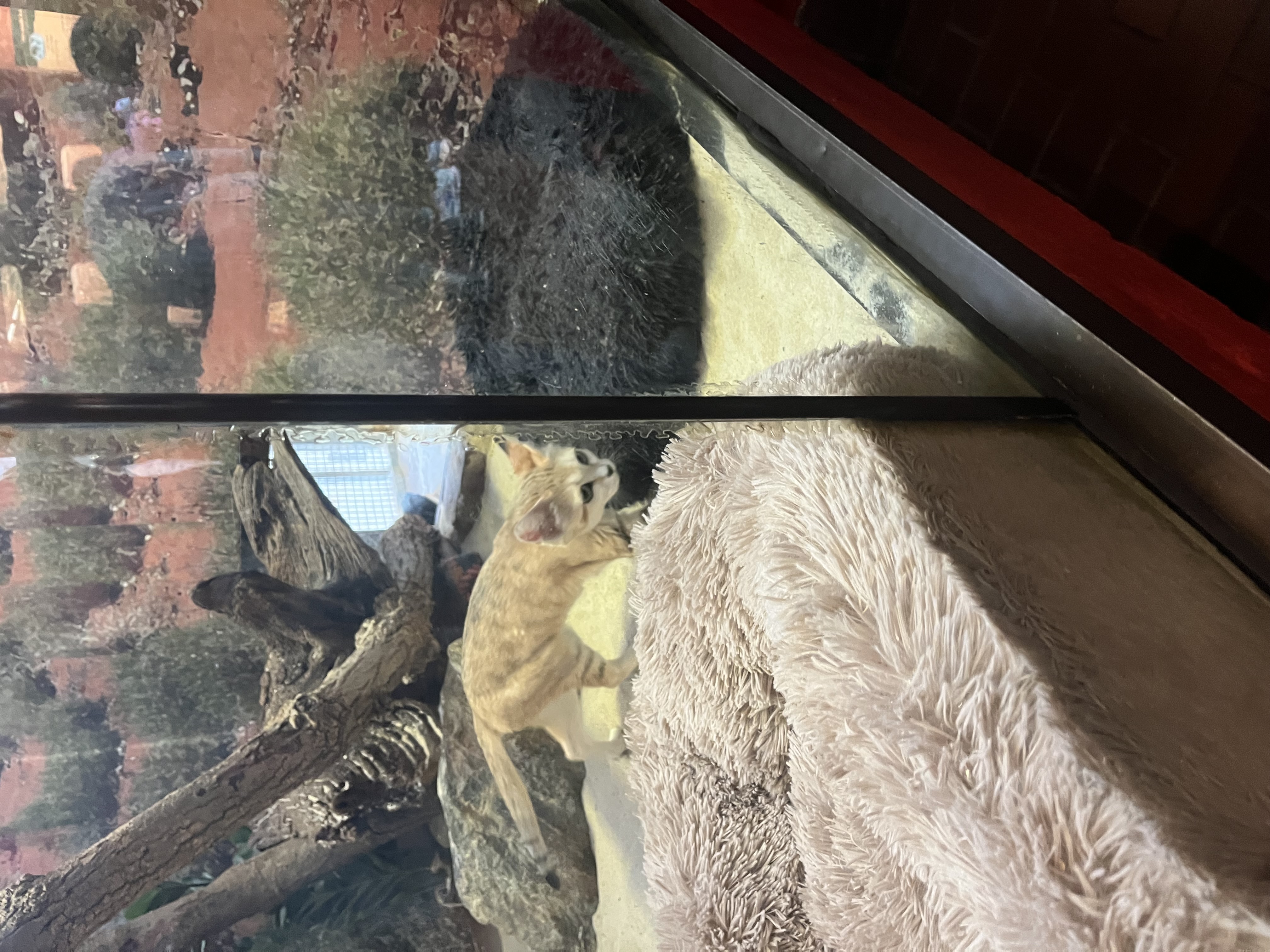
The Sand Cat!
My excursion report this semester was the scholar's trip to the zoo. Upon arrival, my group went to explore the main path including the elephants and big cats. The first building we explored was the small mammal house. The first animal we saw was the Fennec Fox, which is the smallest of the dogs, wolves, and fox species. It also has the largest ears for its size. The second animal was the sand cat, which looks like an ordinary cat but can survive very high temperatures. Both of these animals demonstrated pacing behavior and seemed to be looking for a way out. Another animal is the golden lion tamarin from coastal regions of Brazil. They had a reddish coat and were very small. A final species in the small mammal house was the prehensile-tailed porcupine. They have thick quills and long tails to aid in climbing. They are from South America. There didn’t seem to be many interactive displays or anything beyond plain text. I think this hall was aimed at all ages considering everyone can get excited about animals. There were large pictures for the children to understand, and then text that I saw some parents reading, but no kids were reading.
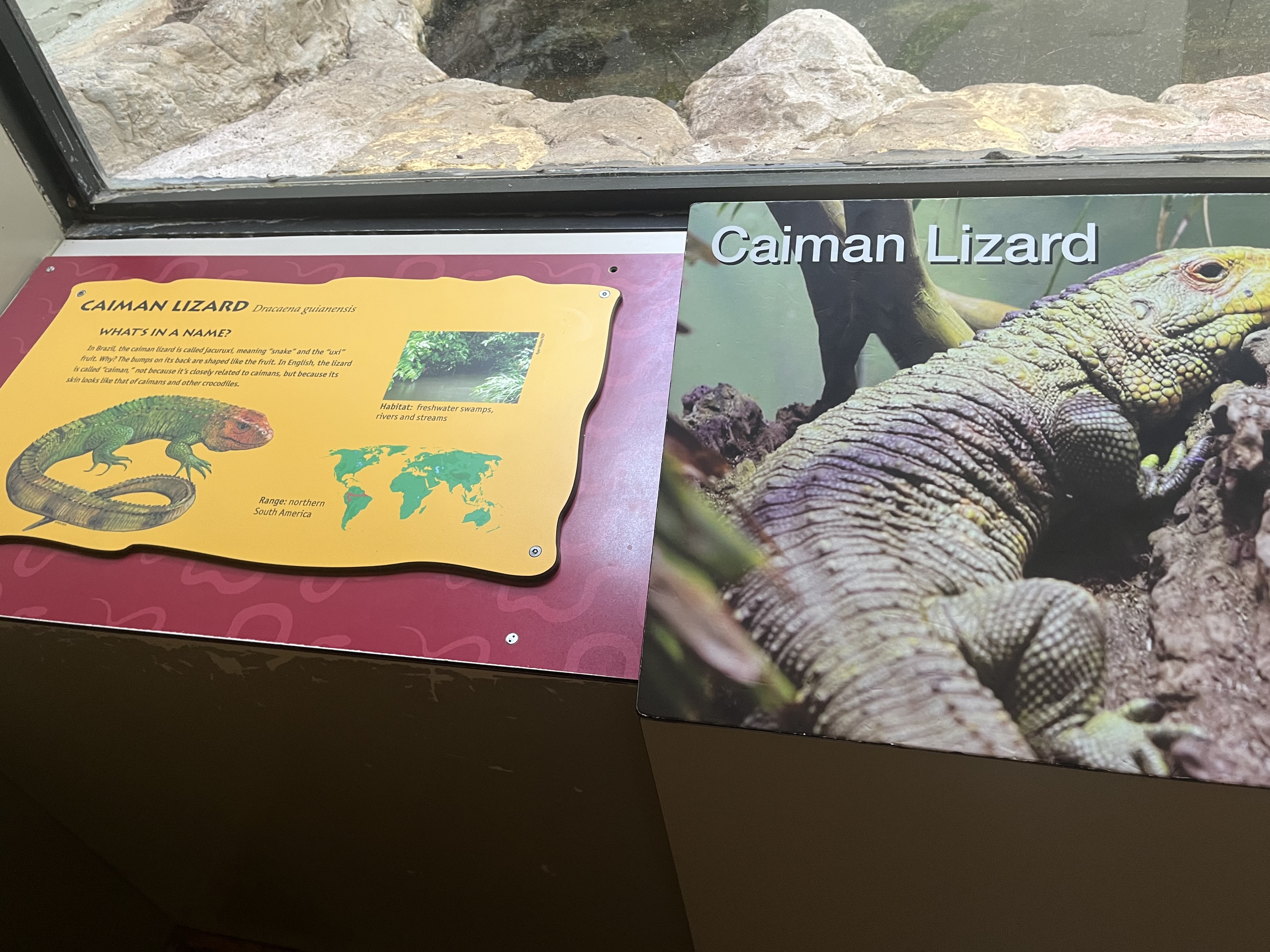
The display that was for the Caiman Lizard
The next house was the reptile house. One species we saw was the black tree monitor which is a very curious species and was climbing on the glass. It uses its long tails to climb and they are very agile. Another species we saw was the caiman lizard. It is a large lizard from the Amazon who catches and uses its powerful jaws to crush prey. A third species we saw was the Cuban crocodile, which was being immobile with its mouth open. They cannot generate heat metabolically, so they sit in the sun and soak up heat that way. The final species we saw was the aldabra tortoise, which was massive and slow moving. They are from one of the Madagascar islands. There were more interactive displays in the reptile house including a skeleton of how a human could (or couldn’t in this case) swallow prey bigger than its head like the caiman lizard. There was also a diagram of a cobra's head. I found this more interesting than informative, and led me to be more curious about the workings of these animals. This building had the same education level as the small mammal house, and the same pattern of parents reading and kids ignoring continued here.
Our third building was Amazonia. The first species was the freshwater stingray which lives in the Amazon river and crawls along the bottom. Their mouths are on the underside of their bodies, and they have slits to help them breathe and sense on top of their heads near their eyes. The second species is the arapaima. They are the largest freshwater fish and can be up to 10 feet in diameter. It can survive up to 24 hours out of the water. The third species is the roseate spoonbill which has bright plumage and a large wingspan. The final species is the golden frog which is extinct in the wild, but conservationists are working to preserve its species. Since it has bright colors, its skin is very toxic. There were a few interactive displays with buttons, but there was also a research section which had more in depth information on amphibians. I found it informative and this research center is why I believe the education level was higher than the other areas of the zoo. Most people over the age of 18 were reading the informative displays.
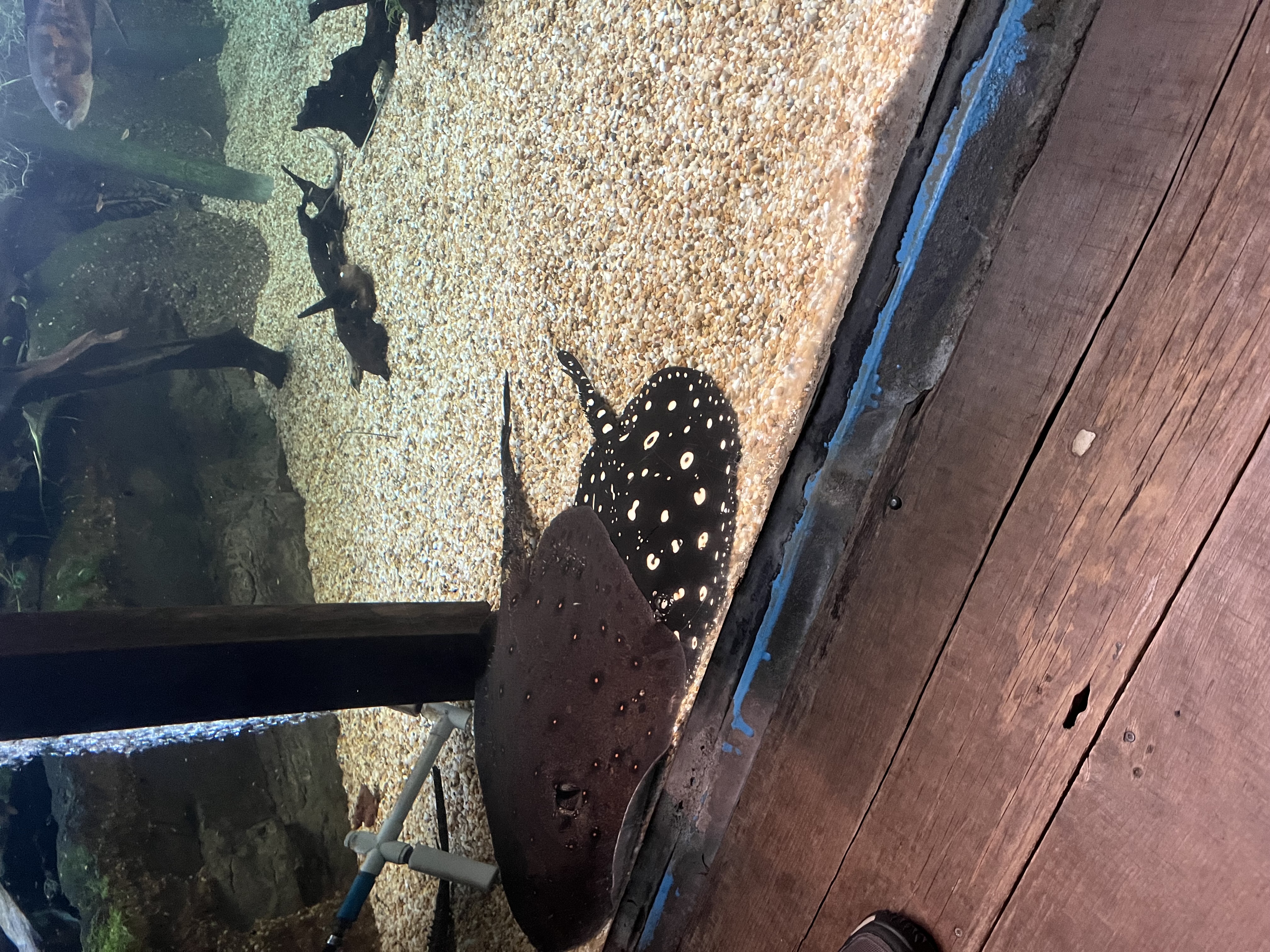
Two freshwater stingrays!
Besides text and displays, the zoo has many resources to get people interested in learning about zoology. One of these things was having a “tour guide” of sorts in the small mammal house. She stood by the prairie dogs and would occasionally tell people about the animal's behavior and why it was doing that. She would also answer questions. I thought this was helpful as it gave people an opportunity to learn beyond what was written. Another resource was having a trivia stand near the reptile house. People could get in line to answer some trivia to receive a sticker. This promotes curiosity about reptiles and amphibians, and generates more questions on the subject. Kids are also interested because of the sticker.
Finally, animal welfare is very important to the zoo, as keeping them healthy mentally is just as important as physically. One example of providing comfort to animals was in the sand cat exhibit, where a jungle gym like you would find in a home was there to give it some activity. The cat also had blankets and a decent amount of room to run around. This provides comfort and stability to the animal. Another way was in the monkey exhibits where lots of branches and artificial beams were placed to give the animal a place to swing from and provide it activity and welfare. Overall, I really enjoyed visiting the zoo and love learning about the niche facts about the different animals housed there.